
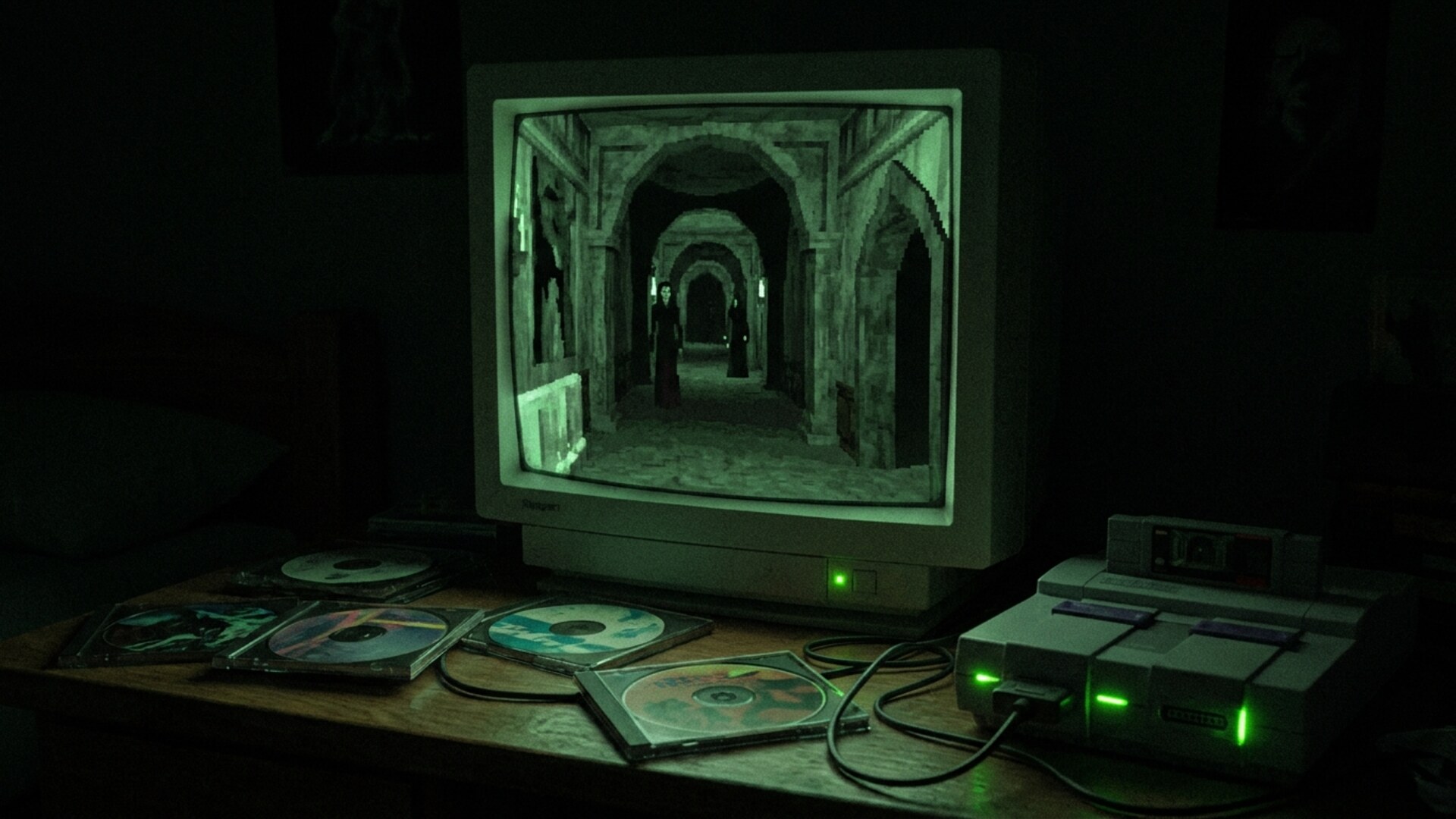
Scroll through your feed long enough and you’ll eventually hit a nostalgia trap. It’s usually a low-res screenshot of a PS1 character with clipping issues or a Saturn disc that looks like it was printed on a napkin. But today, we are diving back into the late-90s analog horror pit with a title that defined the era’s experimental spirit: 'D'. If you think you know horror games, you probably only know the survivors. This one? This one is the victim who fights back with a camcorder and pure panic.
The Visionary Behind The VHS Static
Before Kenji Eno became a meme for his weird, charismatic interviews, he was crafting interactive cinema that pushed boundaries. As the director of 'D', Eno didn’t just make a game; he made a psychological thriller wrapped in a CD-ROM package. Released in 1995 by the studio Warp, this title wasn’t about jumping on goombas or solving complex puzzles. It was about survival, voyeurism, and the terrifying vulnerability of being watched. Eno’s direction stripped away the power fantasy, leaving players with nothing but a handheld camera and a race against time.
Laura Harris: The Antagonist Who Became The Protagonist
Here is the twist that most modern summaries miss. The narrative follows a character named Laura Harris. In typical horror fashion, Laura is a victim of a stalker, forced to hide in her apartment while an unseen assailant torments her. But as the game progresses, the lines blur. The perspective shifts. The player doesn’t just control Laura; they become complicit in her descent. It’s a meta-commentary on the audience’s desire to watch suffering, wrapped in a package that feels like a found-footage film gone wrong. Laura isn’t just a girl next door; she’s a mirror reflecting our own voyeuristic impulses.
Why It’s Ranked #1 On The List Of Forgotten Interactive Nightmares
Why does 'D' deserve a spot in the top tier of 90s horror? Because it was everywhere, yet nowhere. Acclaim Entertainment handled the heavy lifting for the Saturn, PlayStation 1, and MS-DOS releases, bringing Eno’s vision to the mainstream. But the international distribution adds another layer of rarity. In North America, Panasonic published the 3DO version, while San-Ei Shobo Publishing handled the Japanese market for the same console. This fragmented release history means 'D' is a ghost in the machine of gaming history. You can’t just buy it at your local gas station. You have to hunt for it.
The gameplay loop is deceptively simple. You watch tapes. You react. You hide. But the tension is suffocating. Every click of the mouse or press of a button feels like a heartbeat in the dark. It’s a masterclass in atmosphere, relying on implied threats rather than jump scares. The graphics, while dated, serve the aesthetic of grainy surveillance footage. The sound design, with its distorted whispers and distant footsteps, still manages to make modern players check their locks. 'D' isn’t just a relic; it’s a blueprint for the analog horror genre that is currently dominating TikTok. It’s raw, it’s uncomfortable, and it’s absolutely essential. If you want to understand the roots of interactive fear, you have to go back to Laura Harris and the studio that dared to make you watch.
Comments (34)